Species distribution modelling of Odonata using Citizen Science Data and Machine Learning Random Forest Algorithm in Sulawesi Island
Abstrak
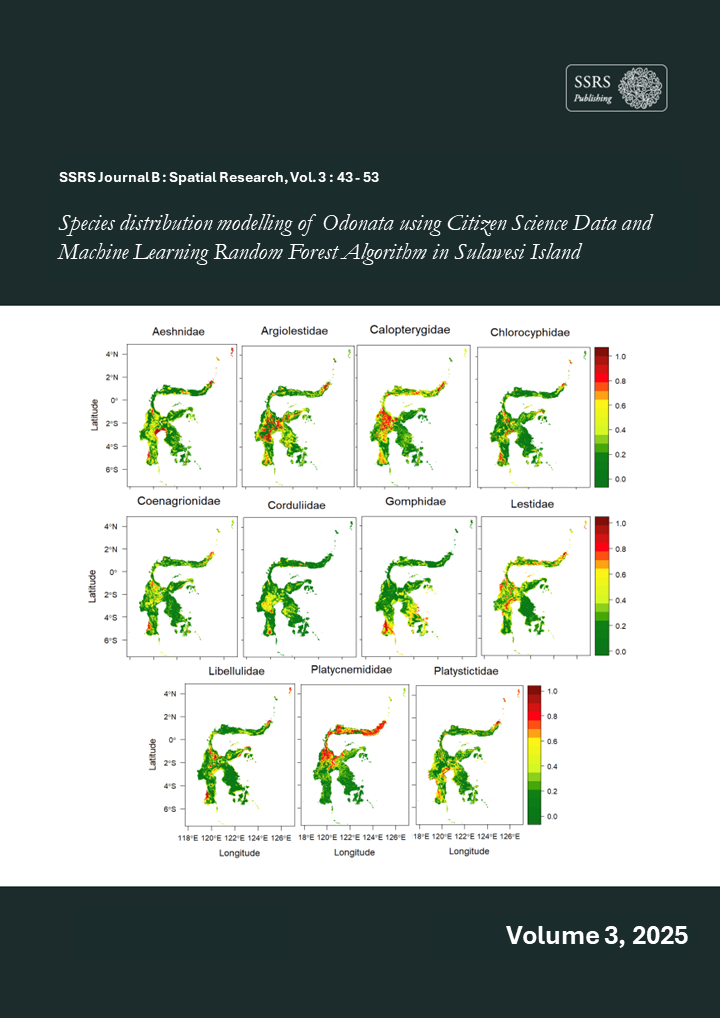
Odonata are a group of insects that play an important role as natural bioindicators due to their sensitivity to changes in environmental quality, particularly in aquatic ecosystems. These insects are highly dependent on both aquatic and terrestrial habitats throughout their life cycles, making them highly vulnerable to ecological disturbances. Sulawesi Island, located in the Wallacea biogeographic zone, has a high diversity of Odonata species, including many endemic species. However, anthropogenic activities such as deforestation, agricultural expansion, and mining are putting pressure on the sustainability of their natural habitats. This study aims to map the potential distribution of Odonata species on Sulawesi Island using a Species Distribution Modeling (SDM) approach with the Random Forest machine learning algorithm. Species presence data were obtained from the Global Biodiversity Information Facility (GBIF) citizen science platform and combined with 12 bioclimatic variables, including temperature (bio1, bio2, bio4–bio11), seasonal temperature (bio3), and annual precipitation (bio12). The modeling results showed that there were 2,152 Odonata distribution records from 11 families, including endemic species and several species with an “Endangered” conservation status according to the IUCN. The bioclimatic variables that most significantly influence habitat suitability are annual precipitation (bio12) and daily temperature variation (bio2). These findings demonstrate that a citizen science-based SDM approach and algorithms. The modeling results show that there are 2,152 Odonata distribution records from 11 families, including endemic species and several species with an “Endangered” conservation status according to the IUCN. The bioclimatic variables that most influence habitat suitability are annual precipitation (bio12) and daily temperature variation (bio2). These findings suggest that a citizen science-based approach combined with the Random Forest algorithm can be an effective method for supporting biodiversity monitoring and conservation planning. This study also emphasizes the importance of habitat conservation strategies and the development of long-term monitoring systems to ensure the survival of Odonata species in the Wallacea region.