Investigating the Impact of the Tsunami at Handeleum Island Resort, Ujung Kulon National Park Using Geospatial Technology
Kata Kunci:
Tsunami, Ujung Kulon National Park, geospatial, indicesAbstrak
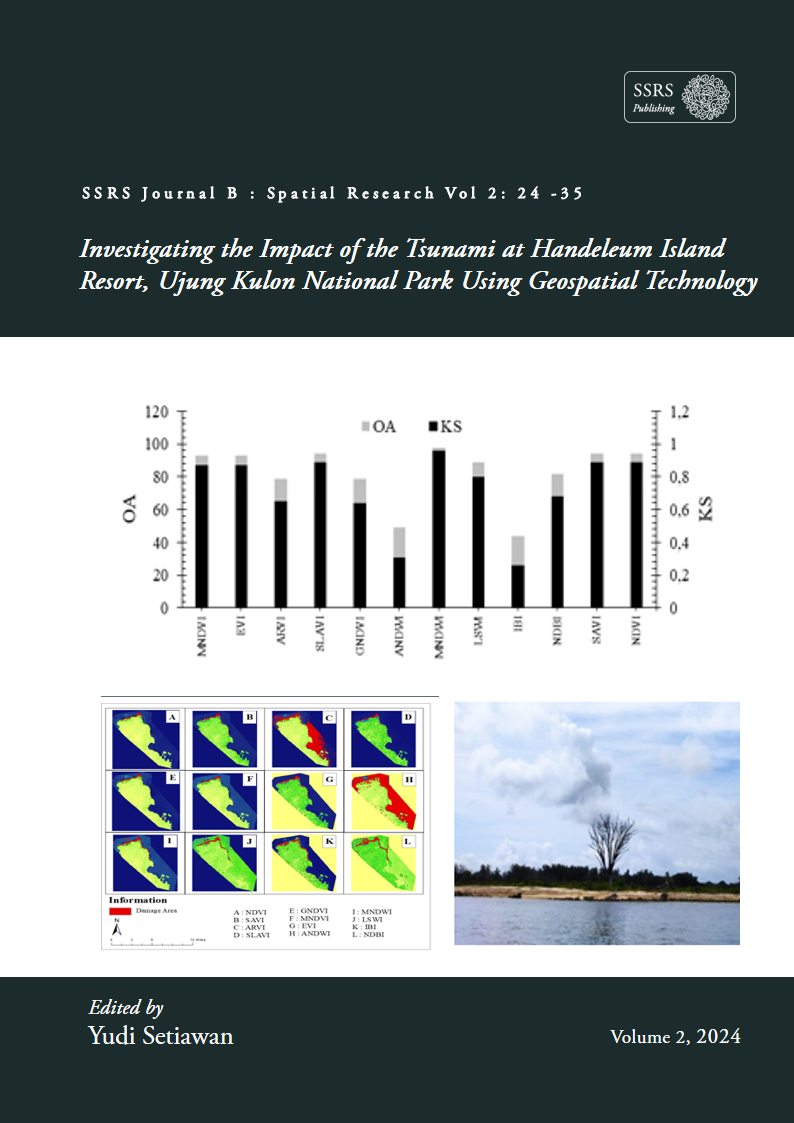
Natural disasters are events that often occur anywhere and anytime. The tsunami natural disaster is a tidal wave disaster generated by tectonic earthquakes, volcanic eruptions in the ocean, or landslides that can cause damage, loss and even take lives. Ujung Kulon National Park (UNKT) is one of 12 existing national parks on the island of Java and is home to key species of the Java plain. Biodiversity in the national park is threatened by the volcanic activity of Anak Krakatau. The most recent activity generated a tsunami wave in 2018 that damaged most of the coastal forest ecosystems on the northern Ujung Kulon peninsula. The geographical condition of UNKT which varies from flat, sloping, wavy, hilly, to mountainous, causes the high flora and fauna in the area. The tsunami event will cause considerable damage, especially to the flora and fauna in the area. Affected areas are identified and evaluated using a comparison of the vegetation index Normalized Difference Vegetation Index (NDVI), Modified Normalized Difference Vegetation Index (MNDVI), Enhanced Vegetation Index (EVI), Soil Adjusted Vegetation Index (SAVI), Atmospherically Resistant Vegetation Index (ARVI), Specific Leaf Area Vegetation Index (SLAVI), and Green Normalized Difference Vegetation Index (GNDVI), the water index is Augmented Normalized difference water index (ANDWI), Modified Normalized Difference Water Index (MNDWI), and Land Surface Water Index (LSWI), and the Normalized Difference Built-up Index (NDBI) and Index-Based Built-up Index (IBI). The classification shows that there are 1.268,53 ha (1,06% of the total conservation area). The analysis shows that the tsunami had a negative impact on the coastal forest vegetation on the Ujung Kulon peninsula as well as the surrounding settlements. Therefore, these problems need special attention, especially in the UKNT ecosystem. This study is expected to be a consideration for the management of the UKNT area in order to preserve the existing ecosystem to protect the endangered Javan Rhino.